Volumes
8 Titles

Volume 6
Smart Enforcement: Remote Digital Access to Tangible Property for the Enforcement of Legal Claims
18.06.2026
This dissertation examines “Smart Enforcement”, i.e. the use of remote digital access to connected devices for the enforcement of private legal claims. It addresses the question of whether ...
The printout is available at booktrade

Volume 5
Systemic Risks in the Digital Age
10.06.2026
The Digital Services Act (DSA) requires operators of very large online platforms (such as X, Instagram, and TikTok) and search engines (such as Google) to analyze and mitigate “systemic risks.” ...
The printout is available at booktrade

Volume 2
Deals statt Recht? Die Einbindung der Ukraine in ein zukünftiges Europa
28.01.2026
Der Juristische Fachbereich der Universität Trier und das Institut für Recht und Digitalisierung Trier (IRDT) freuen sich, den zweiten Band unserer „Trierer Vorlesung zur Zukunft ...
The printout is available at booktrade

Volume 1
Democracy as an EU Value
25.08.2025
The Law Faculty of Trier University and the Digital Law Institute Trier (IRDT) are proud to publish the first lecture of our new “Trier Lectures on the Future of Europe”. This ...
The printout is available at booktrade

Volume 4
Artificial Intelligence and Fundamental Rights: The AI Act of the European Union and its implications for global technology regulation
21.08.2025
The printout is available at booktrade
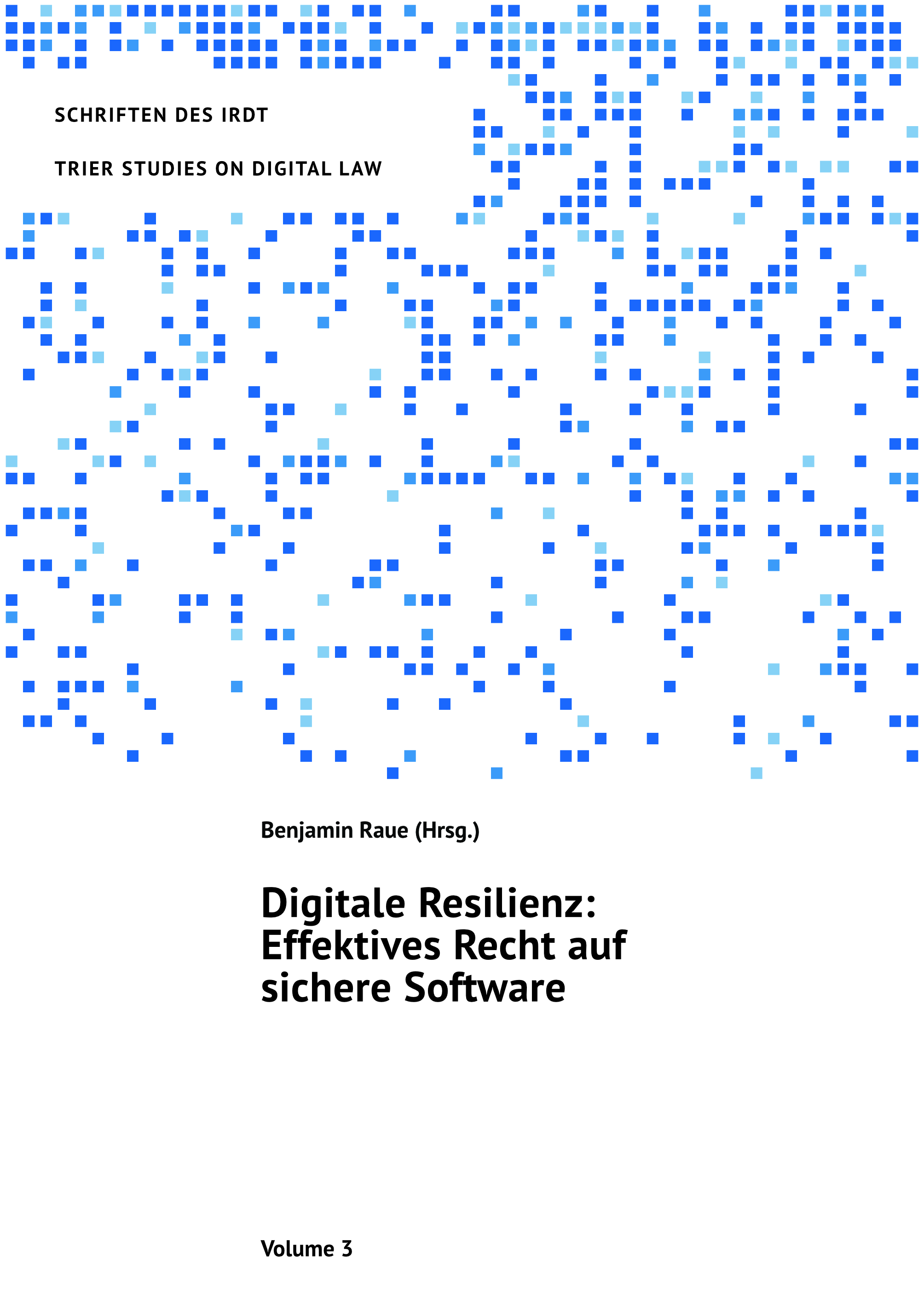
Volume 3
Digital Resilience: Effective Right to secure Software
12.04.2024
Volatility, uncertainty, complexity and ambiguity characterize current current world events. This has an impact on digital systems, which are increasingly susceptible to threats and ...
The printout is available at booktrade
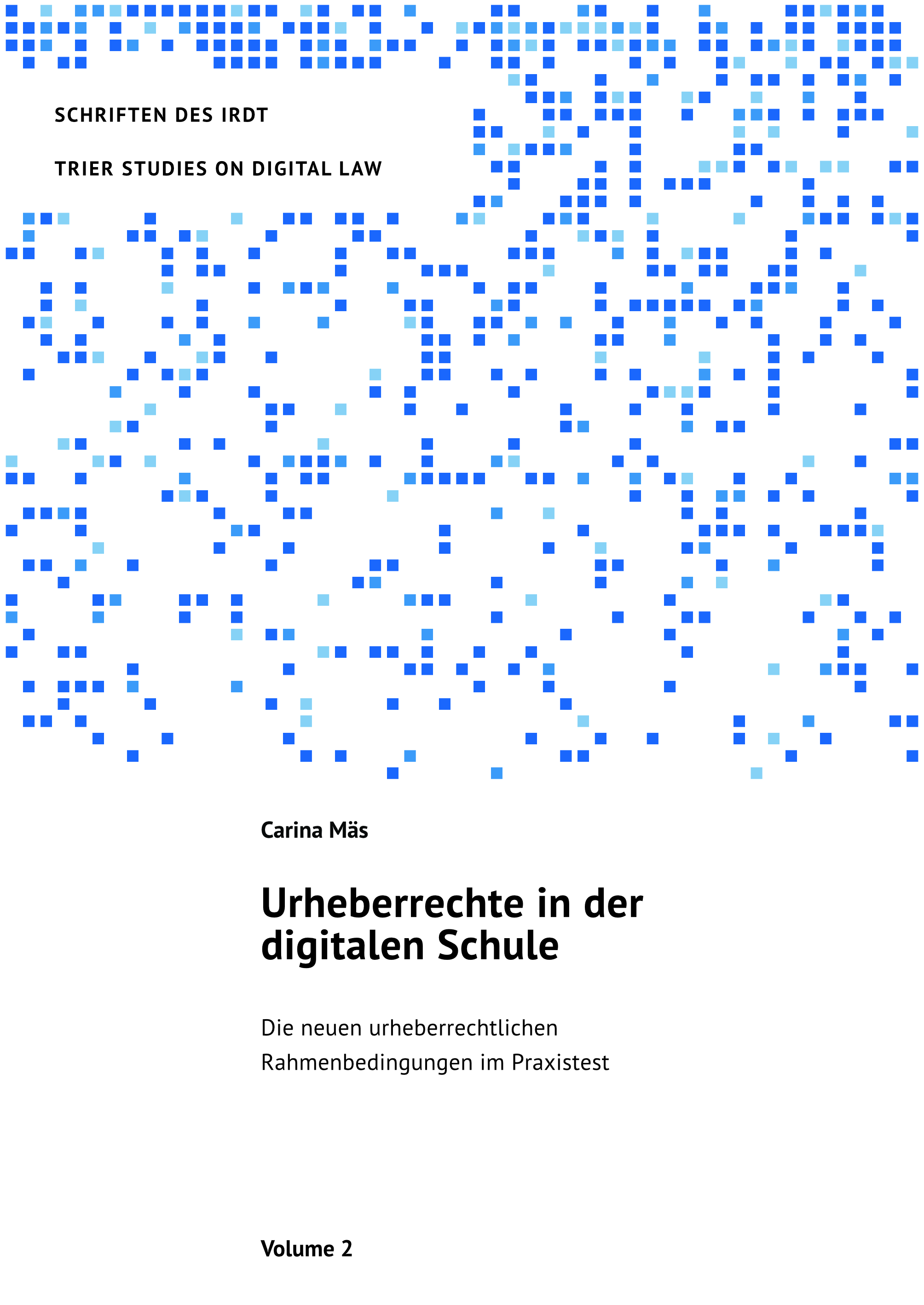
Volume 2
Copyright in the digital school: The new copyright framework in a practical test
29.06.2023
Can I include images from the Internet in my materials, show music by current artists in class, or play videos in class? – These are questions that arise every day in the digital school, ...
The printout is available at booktrade
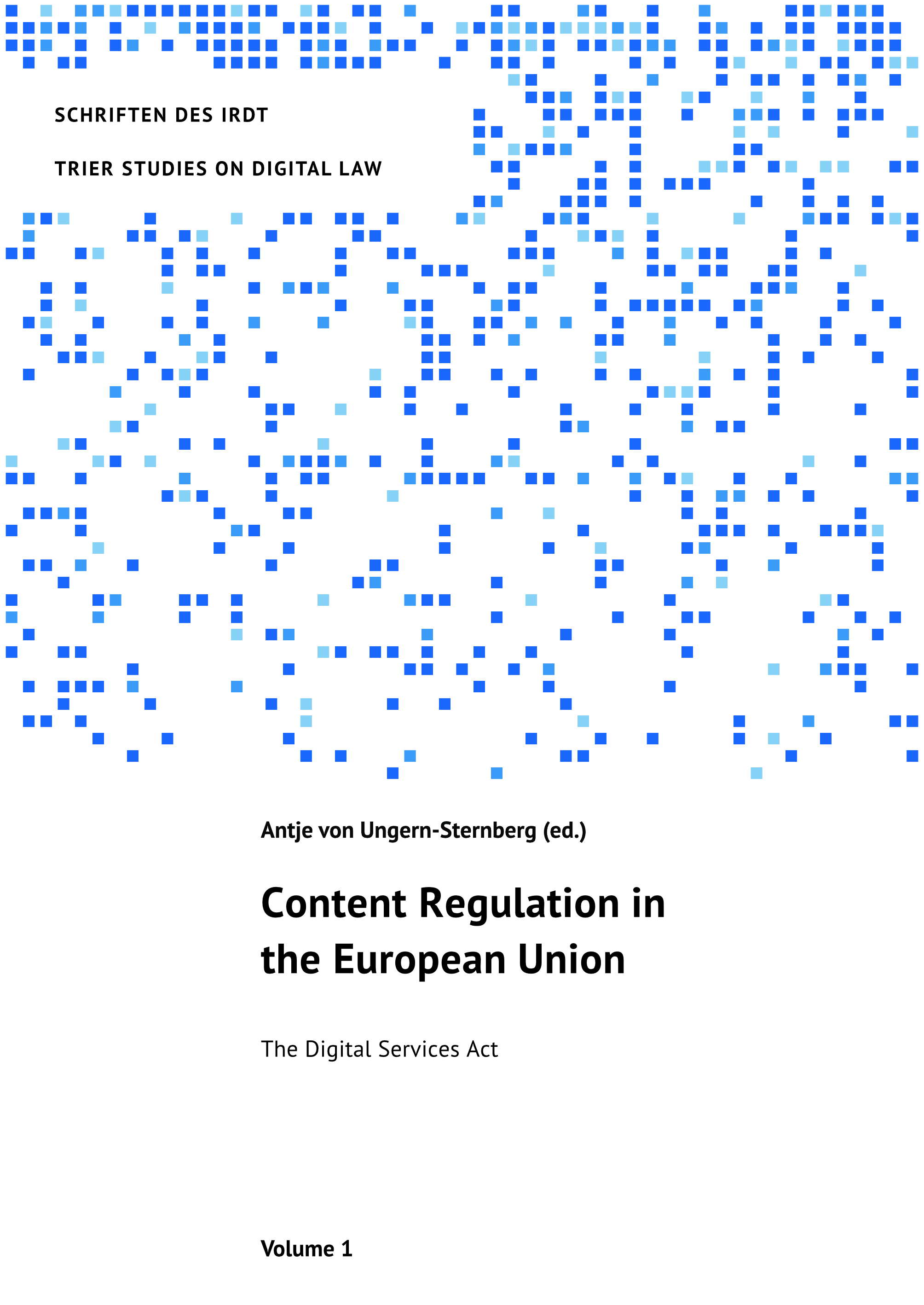
Volume 1
Content Regulation in the European Union: The Digital Services Act
23.05.2023
Illegal and (lawful, but) harmful content – most notably hate speech and fake news, but also violent videos, copyright infringement, or child pornography – is a crucial problem on digital ...
The printout is available at booktrade